
Loading...
Serving College Station, TX and surrounding areas. (979) 921-8165
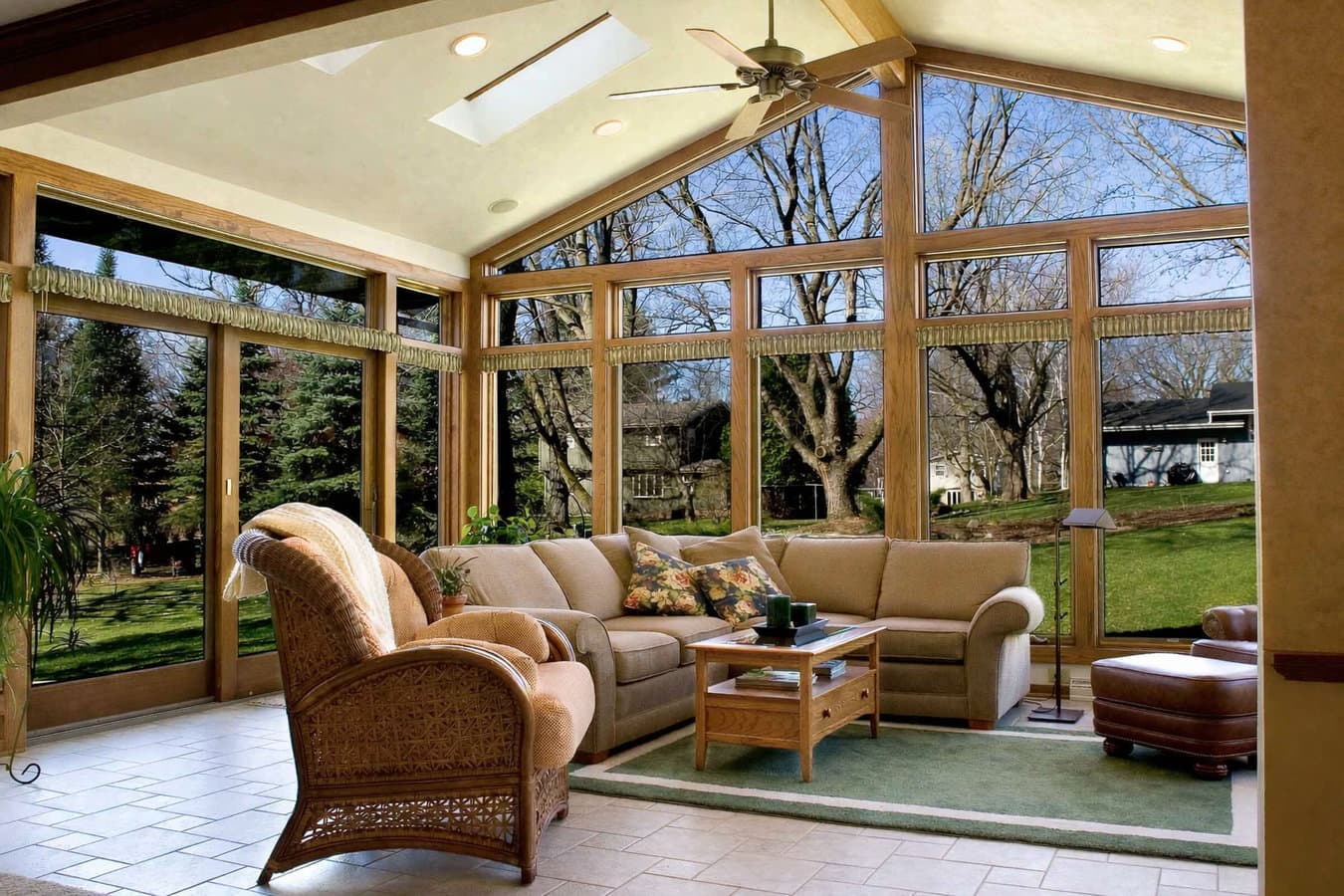
Your deck is out there getting beaten up by College Station summers while you avoid it from May through September. We enclose it into a real room - insulated, climate-controlled, and permitted - so you get year-round use out of the space.
Deck-to-sunroom conversion in College Station means building walls, a roof, and windows around your existing deck structure, turning open outdoor space into a fully enclosed, livable room - most conversions on a structurally sound deck take three to six weeks of active construction once permits are in hand.
The starting point for this project is different from a patio conversion in one important way: a deck is elevated and framed with wood, while a patio is a concrete slab. That means the first question is whether your deck's framing and footings can carry the additional weight of a roof and enclosed walls. Most residential decks are built for furniture and foot traffic, not for the heavier load of a full room structure. A contractor who does not check this before drawing up plans is skipping a step that matters a great deal six months after the project is done. Once the structural question is resolved, the process looks a lot like a patio-to-sunroom conversion - framing, windows, roof, HVAC, and interior finishing.
In College Station's housing market, enclosed living space adds measurable appraised value in a way that an open deck does not. If your deck is large enough to fit a table and seating but sits empty for most of the year, converting it into a permitted room is one of the more direct ways to get real daily use out of that square footage - and to have it count on paper when it matters.
If you look out at your deck on a July afternoon and cannot remember the last time anyone used it, the heat is winning. College Station summers are long and punishing - heat indices regularly push past 105 degrees - and an open deck becomes more of an eyesore than an amenity for most of the year. A sunroom conversion gives that space back to you with shade, climate control, and a reason to actually be out there.
If your deck is large enough to fit a dining set and seating but you only use it on the handful of mild days in spring and fall, you are essentially paying for square footage that does not serve you. Homeowners often realize this when they start wishing for a home office, a playroom, or a quiet reading space and then look at the deck and think it could be something more.
Decks in College Station take a beating from UV exposure, humidity, and the occasional hard freeze. If your deck's surface boards are weathered or faded but the posts and framing underneath are still firm and level, that is actually a good conversion candidate - you are not starting from scratch, you are building on a foundation that is already there.
College Station's real estate market is competitive, and enclosed, climate-controlled living space adds more appraised value than an open deck. If you are planning to sell in the next several years and want to make a home improvement that pays back, converting a deck to a permitted sunroom is one of the more reliable ways to add square footage that shows up on an appraisal and appeals to buyers.
We start every deck conversion with a structural assessment - checking the deck framing, the footings and their condition in College Station's shifting clay soils, and how the deck connects to your home at the ledger board. If reinforcement is needed, we address it as part of the project scope with a clear cost line, not as a surprise mid-build add-on. From there the process covers the full build: wall framing, roof structure, windows and exterior doors, exterior finishing, and interior work including drywall, flooring, and trim. Electrical is coordinated with a licensed Texas electrician, and if you want heating and cooling, we tie into your existing system or install a dedicated mini-split. If your situation involves a ground-level slab rather than a raised deck, the same complete approach applies to a all-season room build that starts from the ground up.
We manage every step of the permit process through the City of College Station's Development Services office - plan submission, fee payment, and coordination of all required inspections. If your neighborhood has an HOA, we help you prepare the materials for architectural review and make sure the exterior design meets your community's standards before any work begins. A fully permitted, inspected conversion counts as conditioned square footage on your home's appraisal, which is a meaningful difference in College Station's housing market. The City of College Station Development Services office handles all residential addition permits for the area.
Suits homeowners who want a fully insulated, climate-controlled room they can use comfortably every month of the year, including College Station's intense summer months.
Suits homeowners who primarily want to extend their usable outdoor living into spring and fall without the full cost of insulation and climate control.
Suits homeowners whose existing deck framing or footings need upgrading to carry the weight of a full enclosed room before wall and roof construction can begin.
Suits homeowners in Castlegate, Edelweiss, Pebble Creek, and other HOA-governed neighborhoods who need the exterior design approved by their community before construction.
College Station's climate makes open decks genuinely difficult to enjoy for roughly five months of the year. Temperatures regularly exceed 95 degrees from late May through September, and the humidity that comes with the Brazos Valley's subtropical climate makes heat feel even more intense than the thermometer reads. A deck that cost real money to build is not doing its job if everyone in the house avoids it for half the year. Converting it into a fully insulated, climate-controlled room changes that completely. Homeowners throughout College Station consistently describe the converted room as one of the most-used spaces in their home within the first season after completion.
College Station's clay soils and the HOA presence in many of its newer subdivisions are two factors that shape this project in ways that matter before the first board goes up. The clay-heavy soils that run under neighborhoods like Castlegate and Pebble Creek cause deck footings to shift over time in ways that are not always visible from the surface. And if your neighborhood has an HOA - which is common in subdivisions built over the past 20 years - you will need written architectural approval before construction can start. Homeowners in Navasota and other surrounding communities face similar soil conditions and benefit from the same careful structural evaluation we bring to every project.
We ask about your deck - its size, age, and what you want the finished room used for - and whether you have an HOA or any specific concerns about the structure. This 10-15 minute call helps us understand the project before driving out, and we respond to every new inquiry within one business day.
We visit your home to inspect the deck framing, footings, and its connection to your house. This is your best opportunity to share what you are picturing for the finished room and to ask any questions. Within about a week you receive a written estimate broken into phases - structural work, windows and doors, electrical, and finishing - so you can see exactly where the money goes.
Once you sign a contract, we submit the permit application to the City of College Station and, if applicable, help you prepare HOA architectural review materials. This phase typically takes two to four weeks. Once permits are in hand, structural work begins first - foundation reinforcement if needed, then wall framing, roof, windows, and doors. A city inspector visits during framing before walls close in.
When all work is complete, the city conducts a final inspection and issues approval. We walk through the finished room with you, demonstrate how windows and doors operate, and cover any maintenance items - particularly around window seals and the roof connection point, which see the most wear in College Station's humid climate. You receive all permit documents and the final sign-off.
Free on-site estimate. We assess your deck's structure before any commitment. No pressure, no obligation.
(979) 921-8165We check your deck's framing and footings before committing to a scope or price, because a sunroom built on a deck that was not properly evaluated will develop problems. College Station's clay soils cause footing movement that is not always visible from the surface, and we address any issues as a named line item in the estimate - not as a surprise once the project is underway.
Many College Station subdivisions built in the last two decades have active HOAs with architectural review requirements. We review your HOA documents early, prepare the submission materials on your behalf, and confirm the exterior design meets your community's standards before work begins. Skipping this step can result in required changes or fines after the fact.
We manage the entire permit process with the City of College Station's Development Services office from start to finish. A permitted conversion counts as conditioned square footage in your home's appraisal and is fully insurable. Guidance on what the permit process covers is available directly from the Texas Department of Licensing and Regulation.
In College Station's hot-humid climate, window and insulation choices are not cosmetic decisions - they are the difference between a room you use every day and one you avoid from June through August. We specify materials rated for this climate and explain the options plainly, so you understand what you are getting and why it matters for year-round comfort.
The details that most contractors rush past - structural evaluation, HOA coordination, climate-appropriate materials - are exactly what determine whether a deck-to-sunroom conversion holds up well and stays comfortable for years. We treat those steps as core work, not afterthoughts.
A fully built all-season room designed for year-round comfort, starting from a new foundation rather than converting an existing deck or patio.
Learn MoreThe ground-level version of a sunroom conversion, building walls and a roof on top of an existing concrete patio slab.
Learn MoreCollege Station contractor schedules fill fast in spring. Reach out now and we will lock in your start date before the heat arrives.