
Loading...
Serving College Station, TX and surrounding areas. (979) 921-8165
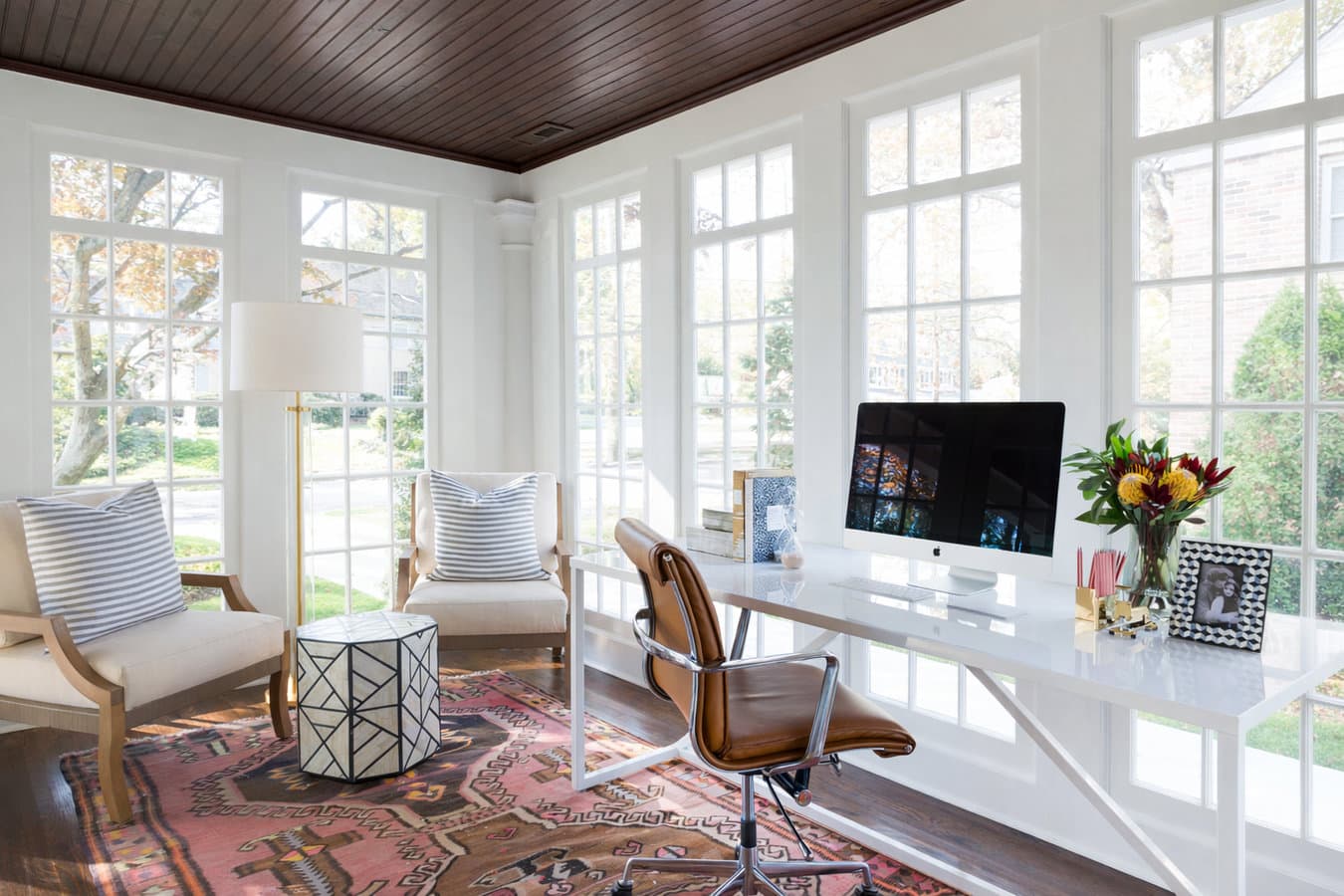
Most sunrooms in Central Texas fail in summer because they were not designed for this climate. We plan every detail - glass, orientation, foundation, and cooling - before a single board goes up.
Sunroom design in College Station is the planning phase that determines whether your addition becomes a room you love or one you avoid from May through September - it covers size, shape, glass type, roof style, solar orientation, cooling, and foundation engineering, with most design-to-permit timelines running four to six weeks before construction begins.
If you are starting from scratch, the design process is where every important decision gets made. The materials chosen during this phase determine your energy bills, your comfort in July, and how well the addition holds up as the Brazos Valley's clay soils shift seasonally. A sunroom that was designed without accounting for local conditions often fails within a few years - gaps at the roofline, sticking doors, and water stains on the ceiling are all signs that the design missed something. If you already know you want a highly customized space with specific dimensions and finishes, our custom sunrooms service is the natural next step after the design phase is complete.
The design phase is also where we work through your HOA requirements and prepare the permit submission for the City of College Station - getting these right on paper saves significant time and money once construction begins.
If your back porch or patio becomes unbearable by mid-morning for five months of the year, a properly designed sunroom with the right glass and cooling can give that space back to you. This is the most common reason College Station homeowners start looking into sunrooms - the outdoor-adjacent space they wanted is just too hot to use.
If your family has outgrown your current layout but you love your neighborhood and do not want to deal with the housing market, a sunroom addition can add meaningful square footage without a full interior remodel. Many homeowners use the space as a home office, playroom, or casual dining area that takes pressure off the rest of the house.
Visible gaps around windows, water stains on the ceiling or walls, or doors that stick seasonally are signs that an older enclosed porch or sunroom is failing. In College Station's climate - with its combination of heat, humidity, and soil movement - older additions deteriorate faster than in more temperate climates. A redesign addresses the root cause, not just the symptom.
If you can see a visible gap between an existing porch and your home's exterior wall, or if the floor slopes noticeably, the expansive clay soils common in the Brazos Valley may have caused movement. Any new sunroom design needs to engineer the foundation specifically for local soil conditions - not just build on a standard slab.
Our sunroom design service covers the full planning process from first site visit to permitted, ready-to-build drawings. We assess solar orientation, glass type, roof style, foundation requirements, and how the addition connects to your home's exterior and existing HVAC system. For homeowners who want full climate control, we help you choose between extending your current system and adding a dedicated mini-split unit. The U.S. Department of Energy's guidance on low-e glass is a useful reference for understanding how glass coatings affect heat and energy costs - we use that same framework when recommending glass packages for College Station's intense summer sun.
We handle permit submission with the City of College Station and, for homeowners in HOA-governed neighborhoods, help prepare the architectural review package. Once permits are approved, the design hands off directly to construction. If your goal is a fully enclosed, finished room, our vinyl sunrooms option is one of the most popular choices for College Station homeowners who want low maintenance and long-term durability in this climate.
Suits homeowners who want to extend the usable months of an outdoor space without the cost of full climate control - best for spring, fall, and mild winter use.
Suits homeowners who want a genuinely comfortable room in July and January - fully insulated, climate-controlled, and built to the same standard as the rest of the home.
Suits any homeowner in the Brazos Valley - the expansive soil here moves seasonally, and a foundation not designed for it will crack and shift within a few years.
Suits homeowners in College Station neighborhoods with active HOAs - we prepare both the city permit application and the HOA architectural review package so nothing stalls mid-project.
College Station averages more than 100 days per year above 90 degrees, and the Brazos Valley's clay soils expand and contract with every rain and dry spell. These two local conditions - extreme heat and soil movement - mean that a sunroom designed without specific knowledge of this area will underperform from day one. Solar orientation, glass coating selection, and foundation depth are not standard decisions here; they require someone who has built in this soil and in this heat before. The Texas A&M AgriLife Extension maintains research on Brazos Valley soil conditions that informs how we approach foundation design for every project in this area.
We work across the full College Station market, including established neighborhoods like Pebble Creek and Castlegate where HOA architectural review adds a step to the process, and newer areas south of campus where larger lots allow more room to work. Homeowners we serve in areas like Bryan and Brenham face the same soil and climate conditions, and we bring that same local-specific approach to every project in the region.
We respond within one business day. We ask about your space, how you plan to use the room, and your rough budget - enough to know whether a site visit makes sense.
We come to your home, measure the space, assess solar orientation and drainage, and walk through your options in plain terms. You will leave the conversation with a clear picture of what is possible.
We put together a floor plan, glass recommendation, foundation approach, and detailed cost estimate. This is the stage where you ask every question - about glass type, cooling, and how the roof connects to your home.
Once you sign off on the design, we submit the city permit application and any HOA paperwork. Construction begins after approvals are in hand - no surprises mid-project.
No pressure, no obligation - just a straight conversation about your space and what is possible.
(979) 921-8165We engineer every sunroom foundation specifically for College Station's expansive clay soil. That means accounting for seasonal movement - the kind that cracks walls and warps door frames in additions not built for this region.
We specify low-e glass packages and design room orientation around College Station's sun angles. The goal is a room you can use in July without the air conditioner running constantly - and without the energy bill that comes with poorly specified glass.
We manage the City of College Station permit submission and, where applicable, the HOA architectural review. Homeowners who try to navigate both processes at once without local experience routinely hit avoidable delays - we handle it so your project stays on schedule.
NAHB membership signals a commitment to current building standards and professional practices beyond what state law requires. It means you are working with a contractor who holds themselves accountable to a peer community, not just to the minimum legal standard.
Every one of these proof points connects to the same outcome: a sunroom that is genuinely usable, properly permitted, and built to last in College Station's specific climate and soil conditions - not just built to look good in a brochure.
A low-maintenance, durable enclosure option built for College Station's heat and humidity - the most popular material choice after the design phase is complete.
Learn MoreWhen your layout, finishes, or structural requirements fall outside a standard package, a fully custom build starts with the same careful design process.
Learn MoreSummer is coming - the sooner the design is done, the sooner you have a room that works when temperatures hit 97 degrees.