
Loading...
Serving College Station, TX and surrounding areas. (979) 921-8165
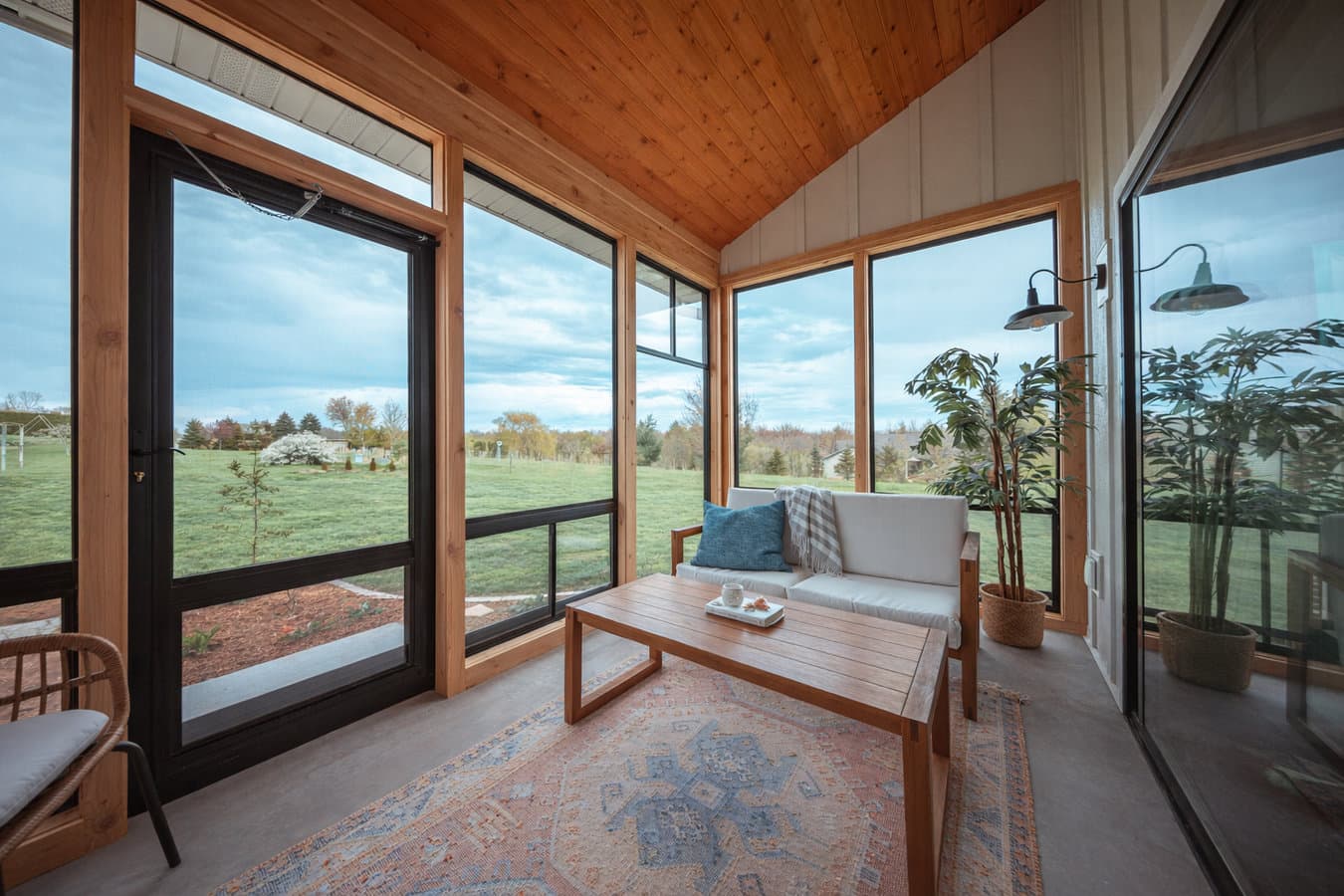
Your patio slab is already there - the expensive part is done. We build a fully enclosed, climate-controlled room on top of it so you stop losing that space to heat, bugs, and rain every summer.
Patio-to-sunroom conversion in College Station means building insulated walls, real windows, and a proper roof on top of your existing concrete slab, creating a year-round living space - most straightforward conversions on a sound slab take two to four weeks of active construction once permits are approved.
A lot of College Station homeowners have a patio slab that goes completely unused from May through September because the heat makes it impossible to enjoy. The good news is that the slab - the most expensive part of any room addition - is already there. What you need is a properly built enclosure: insulated walls, climate-appropriate windows, and a roof that handles Brazos Valley rain and summer sun. The result is a room you can use for a home office, a casual sitting area, or extra living space - not just on the mild days in October but on a Tuesday in August. If you already have a screened porch and want to take it further, a fully enclosed patio room gives you the complete, climate-controlled result.
Not every slab is ready for a conversion without some evaluation first. College Station sits on clay-heavy soils that shift with moisture changes throughout the year, and a slab that looks solid on the surface may have moved in ways that matter once a wall sits on top of it. That honest assessment is one of the first things we do - before any framing, before any walls, before any surprise costs appear mid-project.
If you walk past your patio all summer without using it because the heat is simply too intense, that is a clear sign the space is not working for your family. College Station regularly pushes past 100 degrees from June through August, and an open or lightly shaded patio cannot compete with that. A properly built, climate-controlled sunroom converts that wasted slab into a room your family actually uses every month of the year.
If your household has outgrown your main living areas but a full room addition feels like too much disruption and cost, a patio conversion is the practical middle path. You already have the slab - the most expensive part of any addition. Converting it into an enclosed room is typically faster and less disruptive than breaking new ground on a bare section of yard.
College Station gets roughly 40 inches of rain per year, and heavy spring storms can drop several inches in an afternoon. If water sits on your patio or drains toward your house after a storm, that drainage issue needs to be addressed before any conversion begins. A contractor who spots this during the estimate is doing you a favor - it is far cheaper to fix drainage before walls go up than to deal with it after.
Diagonal cracks or sections where you can feel a step or dip underfoot are signs that the clay soil beneath has shifted - common throughout the Brazos Valley. This does not necessarily rule out a conversion, but it means the slab needs an honest evaluation before any structure goes on top. Catching soil movement early makes the fix less expensive and the finished room more stable over the long run.
Every conversion starts with an honest slab assessment - checking its condition, any signs of soil movement beneath it, and how it connects to your home. We address slab issues before framing begins, not as a surprise add-on mid-project. From there we handle the full build: wall framing, roof structure, windows, doors, exterior finishing, and interior work. If you want climate control, we coordinate the HVAC - either tying into your existing system or installing a dedicated mini-split unit that handles the room on its own. For homeowners who want to see what a raised deck platform conversion looks like, we offer the same full-service approach as a deck-to-sunroom conversion for elevated outdoor spaces.
We pull every required permit through the City of College Station and coordinate all required inspections - you never have to visit a city office or chase down paperwork. A permitted conversion counts as conditioned square footage in your home appraisal, which matters in College Station where functional living space holds real value in a housing market that is closely tied to Texas A&M and consistent local demand. For reference on energy-efficient window options for hot-humid climates, the ENERGY STAR windows program outlines the criteria that matter most in Climate Zone 2.
Suits homeowners who want to extend usable outdoor living into spring and fall without the cost of full insulation and climate control.
Suits homeowners who want the room comfortable year-round - including College Station's long, intense summers - with full insulation and dedicated climate control.
Suits homeowners who need a dedicated work-from-home space that feels separate from the main house, with natural light and a quiet connection to the yard.
Suits homeowners whose existing slab has shifted or cracked due to Brazos Valley clay soil movement and needs foundation work before the room can be built.
College Station sits in a hot, humid subtropical climate where summer cooling costs are among the highest in the country and outdoor spaces are genuinely unusable from May through September. Converting a patio slab into a properly insulated, climate-controlled room transforms dead outdoor square footage into livable indoor space. That matters practically for your family every day, and it matters on paper when your home is appraised. The housing market in College Station is closely tied to Texas A&M and a stable local economy, which creates consistent demand for functional living space. Homeowners throughout College Station regularly find that a permitted, well-built sunroom addition shows up meaningfully in home valuations.
The clay-heavy Brazos Valley soils that run under most College Station neighborhoods add a layer of planning that contractors in drier climates never think about. Slabs here expand and contract with moisture changes throughout the year, and that cycle causes cracking and settling over time. A slab that felt solid when your home was built may have moved since - especially in neighborhoods like Castlegate or Pebble Creek that are now 20 to 30 years old. That is not a reason to avoid the conversion; it is a reason to work with a contractor who assesses the foundation honestly. Homeowners in Bryan and across the wider Brazos Valley face the same soil conditions, and the same careful approach applies throughout our full service area.
We ask a few basic questions about your patio size, how you want to use the finished room, and whether you have any concerns about the slab condition. This is not a sales call - it is a quick fit check before anyone drives to your home. We reply to every inquiry within one business day.
We visit your property, measure the patio, inspect the slab for cracks or soil movement, and look at how the new room will connect to your existing house. Within a few days you receive a written estimate broken down by category - not a single lump sum - so you can see exactly what you are paying for and make informed choices.
We submit plans to the City of College Station for review and permit approval, which typically takes one to three weeks. Once the permit is in hand, construction starts: slab preparation if needed, then wall framing, roof, windows, doors, exterior finishing, and interior work. A city inspector visits during framing to confirm everything is correct before walls close in.
Before we leave for the last time, we walk through the finished room with you - open every window and door, check the ceiling junction, and cover any ongoing maintenance. You receive copies of all permit documents and the final inspection sign-off, so the room is fully documented as a legal part of your home.
Free on-site estimate. We assess your slab honestly before any commitment. No pressure, no obligation.
(979) 921-8165We assess your existing concrete slab for cracks, soil movement, and structural soundness before any framing begins. In College Station's clay-soil conditions, skipping that step is how rooms end up out of level or leaking a few years after completion. You know exactly what you have before any money is committed.
We handle every step of the permit process with the City of College Station's Development Services office, from plan submission through final inspection sign-off. A permitted conversion counts as conditioned square footage in your appraisal and is fully insurable. You never have to visit a city office or track down paperwork yourself.
We specify windows rated for the hot, humid climate conditions College Station sits in - with coatings that block infrared heat and reduce solar gain. The difference between a standard window and a climate-appropriate window on a 100-degree afternoon in this room is not subtle. We explain the options plainly so you make the right choice for your budget and how you plan to use the space.
Every estimate we provide breaks the project into clear phases - slab work, framing, windows and doors, HVAC, and finishing - so you can see where the money is going and make informed decisions about where to invest more or scale back. The National Association of Home Builders at nahb.org has useful guidance on what homeowners should expect in a written estimate for room additions. nahb.org.
A patio-to-sunroom conversion is one of the more involved projects a homeowner in College Station can take on, and the details matter. Honest slab evaluation, proper permitting, and climate-appropriate materials are what separate a room you are still happy with five years from now from one that causes ongoing problems.
Convert an elevated deck platform into a fully enclosed sunroom using the same permitted, full-service approach as a patio conversion.
Learn MoreA complete enclosed patio room with solid walls, windows, and climate control - the finished version of a patio-to-sunroom conversion.
Learn MoreCollege Station contractors book fast in spring. Call now to get your project on the schedule before summer arrives.